Key takeaways
- The grounds are free and have never been ticketed — the main gate is open 06:00–21:00, all year. See what costs nothing here.
- The castle, chapel and Royal Mausoleum are closed to all visitors following King Harald V’s death on 28 August 2026, with no reopening date published. What that means in practice.
- Norway’s Home Front Museum is open and ticketed, with around 5,000 objects from the occupation years and free entry on the Oslo Pass — the best thing inside the walls right now. More on the museum.
- There is no changing of the guard at Akershus. Guard duty here ended in 2019 and the ceremony is at the Royal Palace; the remaining 2026 parades are cancelled. The full story.
- The self-guided loop, Festningsløypa, runs to 31 points and about 50 minutes at a normal walking pace. How long to allow.
- It is 17 hectares (170 dekar), not 170 hectares — a tenfold error that keeps circulating. The complete guide.
What the central Oslo walking tour covers
The flagship walk on this site, and the one that puts Akershus Fortress in the context of the city around it.
Where it goes
- Meets at the bronze Tiger sculpture outside Jernbanetorget metro station
- The Opera House, then Akershus Fortress
- City Hall, Oslo Cathedral and Karl Johans gate
- Aker Brygge and the Parliament, ending near the Royal Palace
What is included
- A live local guide for two hours, in English or Spanish
- Commentary on the fortress and the old town it shaped
- Not included: entry fees to any attraction
- Not included: food and drink
The fortress walk, gate to gate
What you actually pass, in the order you pass it.
Most people come in at Kirkegata, climb, and leave by the water. The self-guided loop, Festningsløypa, marks 31 points and takes about 50 minutes at a normal pace; the walk below is the same ground in the order a first visit tends to take it.
- The main gate, Kirkegata — The reliable entrance, open 06:00–21:00 every day of the year — nobody sells you a ticket, because the grounds have never been ticketed. See all the gate hours.
- The visitor centre at Karpedammen — The long red building by the pond, with exhibitions, a shop, refreshments and the combined ticket that covers all three museums; open daily, to 17:00 in summer and 16:00 the rest of the year.
- The ramparts and the fjord views — Several points along the walls look out over the Oslofjord, the city and Rådhusplassen. The official safety note is worth repeating: the walls are high, so keep hold of children.
- Akershus Castle, from the outside — Håkon V began building in the late 1290s and Christian IV rebuilt it as a Renaissance castle with bastions and new towers, including Blåtårnet. The interior is closed to all visitors, so this stop is an exterior one for now.
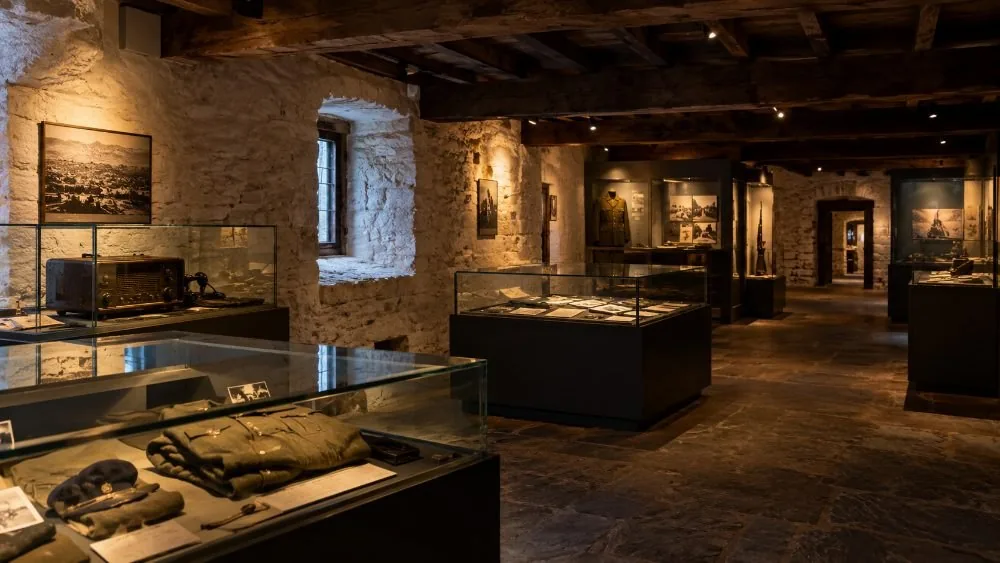
- Norway’s Home Front Museum, at the top — Open and ticketed, in a 17th-century building, covering 1940–1945 with about 5,000 objects, 40,000 photographs and over 600 shelf-metres of archive. Free with the Oslo Pass — what is inside.
- Festningen, Myntgata 9 — The restaurant inside the walls, reached by following Myntgata from the police horse stables. The main room closes for the summer holidays from early July to early August, with an outdoor lunch service running through.
- The sea-side gate down to the Harbour Promenade — A small west-facing gate opposite Shed 38 reopened in March 2023 after twenty years shut, cutting about 300 m off the walk via Kongens gate. It is a staircase with no lift — see the step-free options.
The Armed Forces Museum sits in the outer fortress in an old arsenal building, on the same site since 1860, and is also open. Doors you pass that do not open are usually not closed for the day: the Armed Forces, the Ministry of Defence and the Prime Minister’s office all work inside these walls. If you would rather have someone explain which wall belongs to which king, compare the guided walks.
How booking works here
Work out what you need
The grounds are free, so the only question is whether you want context, a museum or a view from the water.
Pick the tour that fits
Six options, each with a real duration and a live rating from the operator.
Check live dates
Availability comes straight from GetYourGuide, with instant confirmation.
Turn up
Meeting points are listed on every tour page; most are a short walk from the fortress.
Book the walk that includes the fortress
The central Oslo walking tour is the safe first booking: two hours, a live guide, and Akershus Fortress in the middle of it.
Three ways to see the fortress
A walk through it, a private tour inside the museum, or the view it was built to present to anyone arriving by sea.
| Norway Home Front Museum Oslo Private Tour & Transport | Our pickOslo: Guided Walking Tour of Central Oslo with Local Guide | Oslo: Guided Sightseeing Fjord Cruise on Premium Silent Boat | |
|---|---|---|---|
| Duration | 2–3 hours | 2 hours | 2 hours |
| Rating | No reviews yet | 4.7 from 1,692 | 4.7 from 2,079 |
| Group | Private | Shared | Shared |
| Languages | Six, incl. Norwegian | English, Spanish | English |
| Meets at | Festningen, Myntgata 9 | The Tiger, Jernbanetorget | Rådhusbrygge 2 |
| The fortress | Inside it, museum entry included | A named stop on the walk | First sight after departure |
| Best for | The occupation years | A first day in Oslo | The whole headland |
| View → | Book this → | View → |
Photo Gallery
Akershus Fortress, in nine pictures
The walk from the main gate to the water, and what the light does to it.
Every tour on this site that touches the fortress
Six tours, six different reasons. Durations shown where a price would normally sit — we do not print prices.
 Most booked
Oslo: Guided Walking Tour of Central Oslo with Local Guide
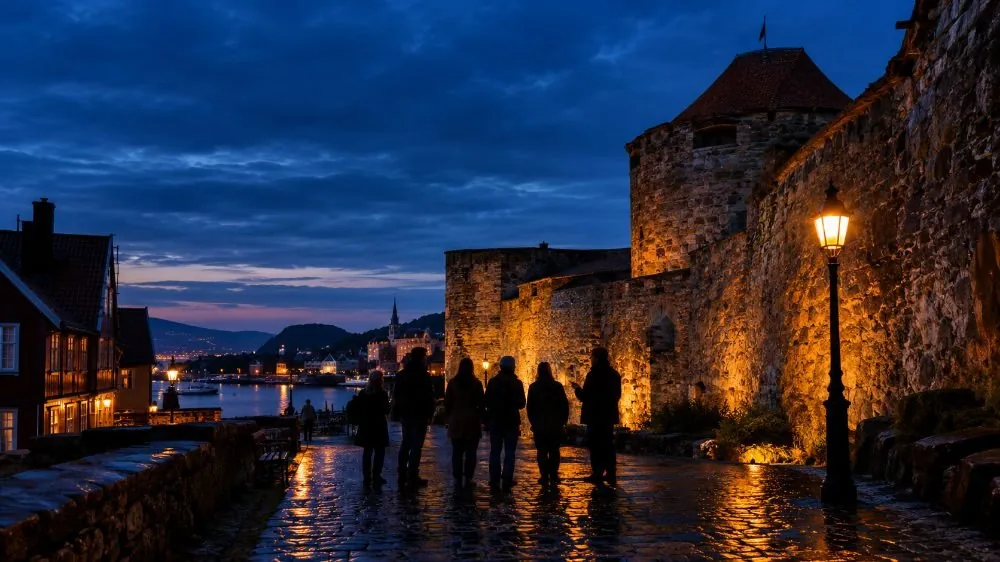 Highest rated
Oslo: Historic Myths & Legends Evening Walking Tour
 Inside the walls
Norway Home Front Museum Oslo Private Tour & Transport
 From the water
Oslo: Guided Sightseeing Fjord Cruise on Premium Silent Boat
 Skip the climb
Oslo: 24 or 48-Hour Hop-On Hop-Off Sightseeing Bus
 English or German
Oslo: Best of Oslo Walking Tour
What travellers said
Review snippets from GetYourGuide, unedited. The private Home Front Museum tour is a new listing with no reviews yet, so it has no quote here.
Nice introduction to Oslo that informed us on what to do the rest of the day.
Marketa was a fabulous guide. She was personable and knowledgeable with great stories.
Great tour, Maria was an excellent and very knowledgeable guide. We loved it.
Great view, very quiet electric ship so you could enjoy the ride to the fullest. The windows are very clean and there’s enough space to sit outside & inside.
Brilliant. So handy, it stops off everywhere you need it to.
Csilla was our excellent guide. She was very informative and provided us with a really good overview of the history of Oslo and Norway.
Ratings and reviews are the operators’ live GetYourGuide figures. Read our full tour reviews ›
Quick answers before you book anything
The four things people get wrong most often, answered in a line each.
Do I need to buy anything to get in?
No. The fortress grounds are free and always have been; you walk in through the main gate and nobody sells you anything. The Oslo Pass makes no difference to grounds access — see what is free and what is not.
Is a tour worth it if the grounds are free?
It depends what you want. A guide buys context rather than access: which wall is Håkon V’s and which is Christian IV’s, and why the city sits where it does. Our honest answer.
Which tour if I only care about the war years?
The private Home Front Museum tour, which includes museum entry and a licensed guide. It is a new listing with no rating and no reviews yet, which you should weigh yourself — our write-up.
Can I get up there without the climb?
The hop-on hop-off bus stops at the fortress, which spares you the rise from the harbour. It is the lowest-rated tour here at 4.1 — why, and who it still suits.
Can’t make these dates?
Browse more available Akershus Fortress tours and find one that fits your schedule — all with instant confirmation and free cancellation.
Akershus Fortress, explained
I spent four winters behind the desk at the visitor centre by Karpedammen, and the first question was almost always the same. Where do I buy the ticket. I answered it several thousand times, and the answer has only got stranger since: you do not need a ticket for Akershus Fortress, and the one you are probably picturing cannot be bought at all at the moment.
Why the fortress is here, and why the city moved to it
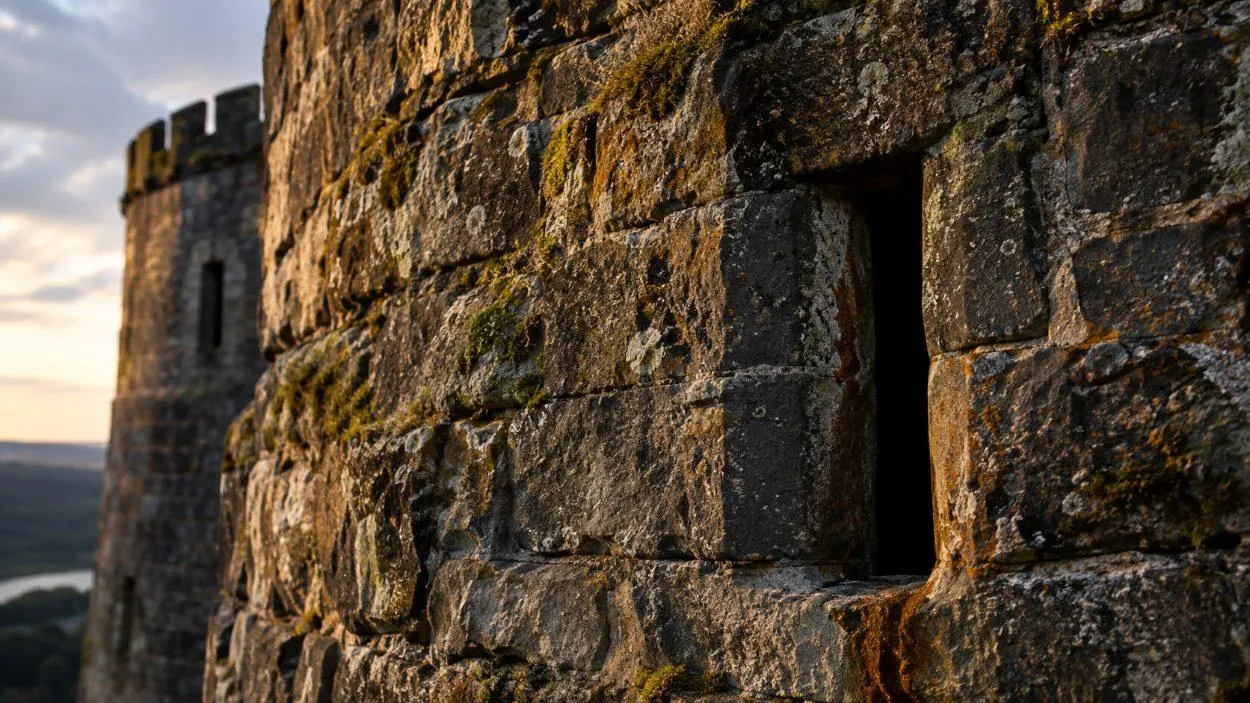
King Håkon V Magnusson began building in the late 1290s, after Earl Alv Erlingsson’s attack on Oslo in 1287 showed how exposed the town was. The fortress is first mentioned in writing in 1300, and by 1308 it was strong enough to hold off a siege by the Swedish Duke Erik Magnusson. It eventually replaced Tønsberg as Norway’s principal castle.
The part people miss is 1624. Oslo burned that August, and on 27 and 28 September Christian IV walked this ground himself and pointed out where he wanted the town rebuilt. About a week later he issued a royal charter of eighteen points ordering a new market town called Christiania, what Norwegian planners call the country’s first town-planning regulation. He put the new city directly under these walls, for protection. If you have wondered why central Oslo sits in a tight grid on this side of the harbour, that is why. From the ramparts you are looking down at a decision one king made on one autumn afternoon.
What you can see now, plainly
Open: the grounds, the ramparts, the visitor centre at Karpedammen, Norway’s Home Front Museum and the Armed Forces Museum. Closed: Akershus Castle, the castle chapel and the Royal Mausoleum. King Harald V died on 28 August 2026 and was interred in the mausoleum after the state funeral on 9 September. The grounds and the museums reopened on 11 September. The castle, chapel and mausoleum are shut until further notice, and no reopening date has been published. I would not plan a trip around a guess at one.
So if you came for the Blue Tower, the chapel or the sarcophagi, that visit is off this season. What is open is better than people expect. The Home Front Museum is the strongest thing open inside the walls: a 17th-century building at the top of the fortress holding roughly 5,000 objects from the occupation years, around 40,000 photographs and more than 600 shelf-metres of archive. It is ticketed, and free with the Oslo Pass. The Armed Forces Museum, in the old arsenal building, has been on this site since 1860. It has not moved and it has not closed; it was renamed and restructured under Forsvarshistorisk museum at the start of 2025.
The wartime material here is not atmosphere. Germany used the fortress as barracks, prison and execution site after the 1940 invasion, and more than forty Norwegian resistance members were executed within these walls. On 17 March 1945, fourteen were shot, among them men from the sabotage operation carried out three days earlier against railway infrastructure; their remains were sunk in the Oslofjord in weighted crates, and in March 2025, eighty years on, underwater drones found seven of them. On 11 May 1945 the fortress was handed to Terje Rollem on behalf of the Norwegian home forces. There are living families attached to all of this, so I tell it as history and leave the adjectives out.
What a guide adds when the gate is already open
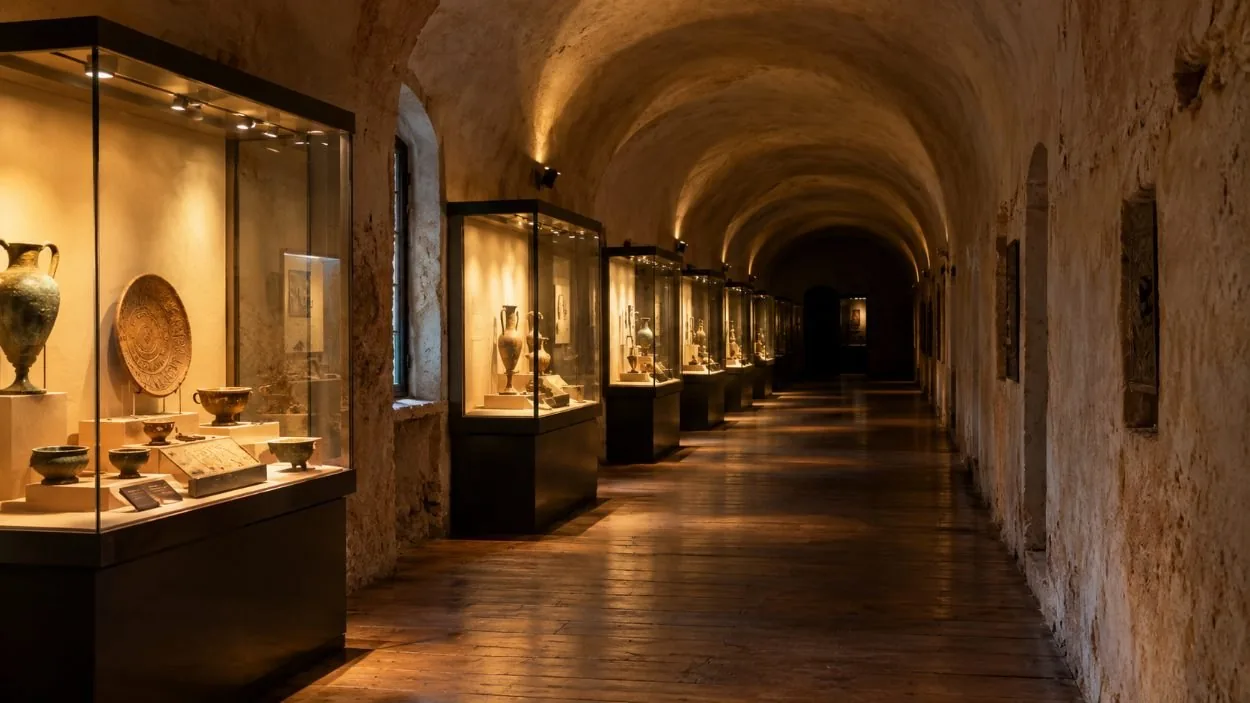
This is the fair question, and I get it most from people who have just realised nobody is going to charge them. Money in Oslo does not buy you through a gate that is already open. It buys context. A guide can tell you which stretch of wall is medieval and which is Christian IV’s, and why one section was called Slaveriet, because prisoners held there could be hired out to work in the city.
What that looks like in practice varies by tour. A walking tour puts the fortress into the shape of the city Christian IV drew around it, which is hard to see from inside the walls. A private museum tour gets you into the Home Front Museum with someone who can pace the 1940–1945 material properly rather than leaving you to read every caption. And a cruise gives you the headland from the water, the view Akershus was built to present to anyone approaching, and the only angle from which the whole thing reads as one object. If none of those appeal, walk it yourself for nothing and use our guide. I would rather you booked nothing than booked something you did not want.
The working headquarters, and the doors that do not open
Akershus is not a museum campus. The Armed Forces, the Ministry of Defence and the Prime Minister’s office all work inside it. That single fact explains most of the small frustrations visitors report. It is why the gates have hours at all, why drones are banned outright, and why a good half of the buildings you walk past have closed doors. People read a closed door as evidence they came on the wrong day. Usually they did not. That building was never open to them, and it will not be next Tuesday either.
Two more corrections while I am at it. There is no changing of the guard here: guard duty at Akershus ended in 2019 and the ceremony is at the Royal Palace. And the fortress was never taken by an attacking enemy in nine documented sieges, which is true, and it was handed to Germany in 1940 without a shot because the government had already left Oslo, which is also true. Both halves or neither. Check the gate hours, come in at Kirkegata, and give yourself longer than you think.
Frequently asked questions
Is Akershus Fortress free?
Yes. The grounds have never charged admission and there is no ticket and no booking — you walk in through the main gate on Kirkegata. What is ticketed is the two museums, and the castle interior, which is currently shut. More on what is free here and on what a ticket actually buys.
Can I go inside Akershus Castle?
Not at the moment. Akershus Castle, the castle chapel and the Royal Mausoleum have been closed to all visitors since King Harald V died on 28 August 2026 and was interred here after the state funeral on 9 September, and no reopening date has been published. The grounds and both museums reopened on 11 September 2026. See the castle page.
Is there a changing of the guard at Akershus Fortress?
No. His Majesty The King’s Guard stopped guarding the fortress in 2019 and the ceremony takes place at the Royal Palace. The guard parade does start at the fortress, from Kontraskjæret, April to September, typically Wednesday to Friday around 13:15 — but the remaining 2026 parades are cancelled for court mourning. Full details.
How long do I need at the fortress?
The self-guided loop, Festningsløypa, covers 31 points in about 50 minutes at a normal walking pace. Add an hour or more if you go into Norway’s Home Front Museum, and a little longer again for the Armed Forces Museum. How to plan the time.
What is actually open at Akershus Fortress right now?
The grounds, the ramparts, the visitor centre at Karpedammen, Norway’s Home Front Museum and the Armed Forces Museum. Closed: the castle interior, the castle chapel and the Royal Mausoleum. The Armed Forces Museum has not moved or closed — it was renamed and restructured on 1 January 2025. See current hours.
Is a guided tour worth it when the grounds are free?
A tour buys context, not entry. The official fortress tours are run by the museum on Saturdays and Sundays, at 11:00 and 14:00 in English, about 55 minutes, and are not included in the Oslo Pass. The walking tours we list cover the fortress as part of central Oslo — our take.
How do I get to Akershus Fortress?
It is a 15 to 20 minute walk from Oslo Central Station to the main entrance at Kirkegata. Tram stops at Kontraskjæret; the metro at Stortinget or Nationaltheatret. Oslo’s tram routes change, so plan the exact connection with Ruter rather than a printed line number. Directions and alternatives.
Is the fortress open in winter?
Yes, all year. The main gate keeps 06:00–21:00 hours through the winter, but the side gates close at 18:00 from 1 October to 30 April, so use the main gate late. Daylight is the other constraint: on 21 December the sun sets at 15:12, so an evening visit in December is a night visit. When to come.
Still have questions? Email us [email protected]