The history of Akershus Fortress
Why it was built
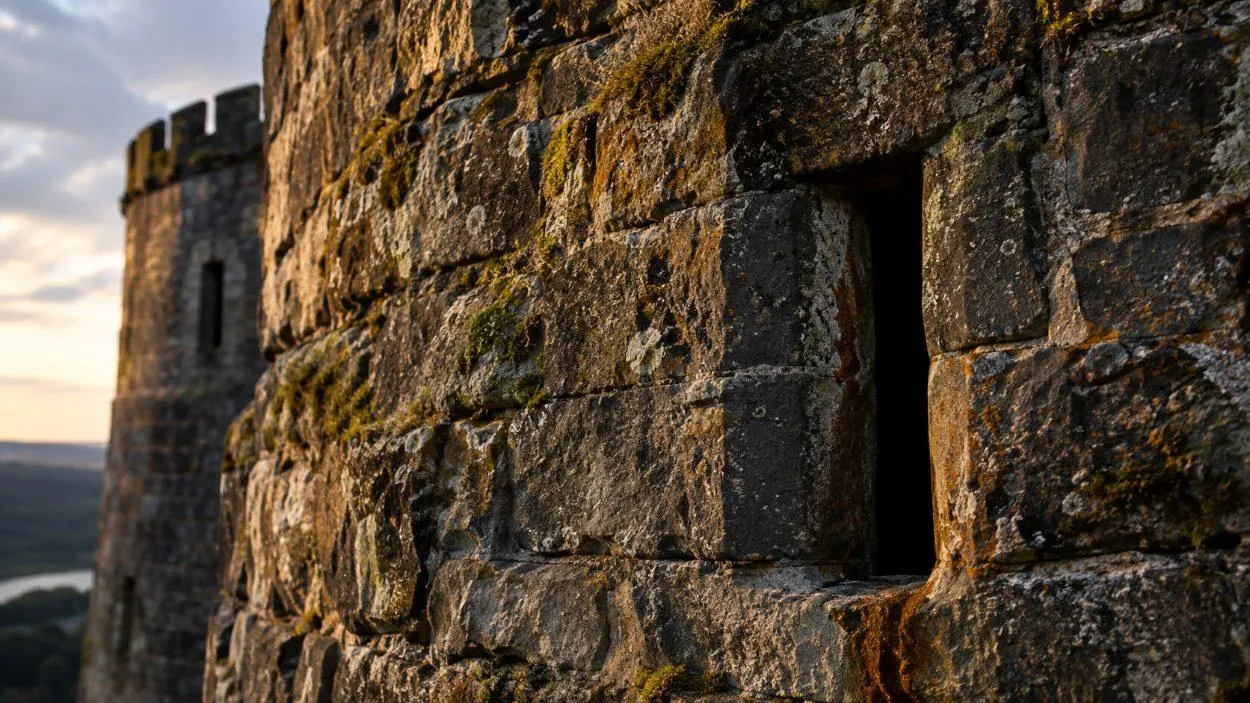
In 1287 Earl Alv Erlingsson attacked Oslo. The city had no answer, and King Håkon V Magnusson started building one on the headland at the mouth of the harbour. Work began in the late 1290s; the castle appears in writing for the first time in 1300. By 1308 it was strong enough to sit out a siege, and over the following century it took over from Tønsberg as Norway’s principal castle. It was a royal residence as much as a fortification, which is why the castle at its centre is a house and not just a keep.
The sieges
Nine of them are documented, and the fortress came through all nine.
| Year | Who | What happened |
|---|---|---|
| 1308 | Swedish Duke Erik Magnusson | Held. |
| 1449–50 | Swedish King Karl Knutsson Bonde | Held. |
| 1502 | Scottish soldiers in Danish-Norwegian service | Held. |
| 1523 | Swedish forces | Oslo’s own inhabitants burned their houses; the Swedes withdrew. |
| 1531–32 | King Christian II | Held. |
| 1567 | Swedish forces, Northern Seven Years’ War | The defenders burned the city rather than leave it to the besiegers. |
| 1716 | Swedish forces | Thirty-nine days. Christiania was badly damaged; the fortress was not taken. |
Twice the city burned to save the fortress, which tells you which of the two the period thought mattered. In 1527 the whole castle north of Vågehals burned as well, though that was not an enemy’s doing.
“Never conquered”, and the caveat
You will see the claim on every second travel page, usually without the second half. Akershus was never taken by an attacking enemy. It was also handed over to Germany in 1940 without resistance, because the government had left Oslo and there was nobody to order a defence. Both things happened. Write both or neither.
Christian IV and the city that moved
Christian IV rebuilt Akershus as a Renaissance castle in the first half of the 1600s, with Italian-inspired bastions and new towers including Blåtårnet, the Blue Tower, and Romerikstårnet. Then, in August 1624, Oslo burned.
On 27 and 28 September that year the king walked the ground himself and pointed out where he wanted the new city. About a week later he issued a royal charter of eighteen points ordering “a new market town called Christiania”, which is remembered as Norway’s first town-planning regulation. He put the city directly under the walls of Akershus, for protection. That decision is the reason central Oslo has the shape it has, and it is the single most useful thing to know before you stand on the ramparts and look down.
The prison, and “Slaveriet”
For a long stretch of Norwegian history Akershus held prisoners: rebels, thieves, political offenders. One section was called Slaveriet, the Slavery, because prisoners from it could be hired out to work in the city. The outlaw and author Gjest Baardsen was held here, as was the thief Ole Høiland. So were early Norwegian socialists, and the men taken after the Kautokeino rebellion of 1852 — the women convicted with them went to Trondheim.
1940 to 1945
Germany occupied the fortress after the invasion in 1940 and used it as barracks, prison and execution site. More than forty Norwegian resistance members were executed here, including members of the sabotage group Pelle-gruppa. On 17 March 1945, fourteen Norwegians were shot, among them men involved in Operasjon Betongblanding, a sabotage operation against railway infrastructure carried out on 14 March. Their remains were sunk in the Oslofjord in weighted wooden crates, east and west of Nesodden. In March 2025, eighty years on, underwater drones located the remains of seven of them. The association Æresgjeld puts the number executed late in the war and dumped in the fjord at 42.
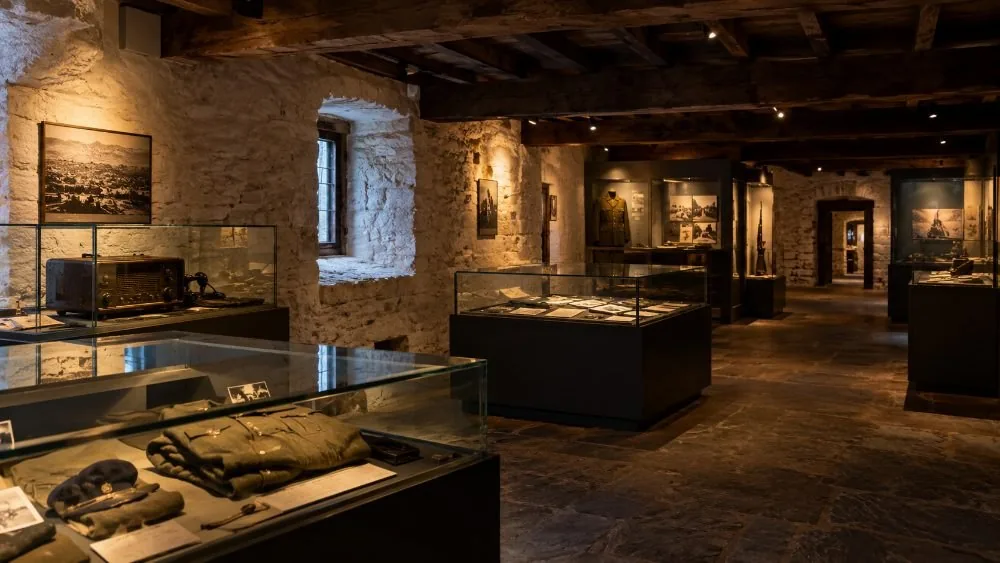
On 11 May 1945 the fortress was handed over to Terje Rollem on behalf of the Norwegian home forces. A marker in front of the Commandant’s Residence records it. The Resistance Museum, at the top of the site, is where this period is set out properly.
The treason trials
After the war a small number of those convicted in Norway’s treason trials were executed at the fortress. Vidkun Quisling was convicted of high treason on 10 September 1945; the Supreme Court rejected his appeal on 13 October and a clemency petition was refused ten days later. He was executed by firing squad at Akershus on 24 October 1945 at 02:40. Sources conflict on the total number of post-war executions here, so I will not give one.
The end of the fortress as a fortress
Oscarsborg Fortress, further down the fjord, was finished in 1856. From that point Akershus stopped being an active defence installation and became a headquarters, a school and barracks, which is broadly what it still is. Investigation and restoration under the architect Holger Sinding-Larsen ran from 1905 to 1925; the castle reopened for official functions in 1947, and a major restoration phase was completed in 1962. The inner fortress you walk through is well preserved largely because of that century of work.
The site covers about 170 dekar, which is 17 hectares, with 91,000 m² of building mass and around 90 protected objects. It was listed by regulation on 17 December 2014. If you read that it covers 170 hectares, somebody dropped a decimal point.
The self-guided Festningsløypa loop runs to 31 points and takes about 50 minutes at a normal pace. It is free, and it is the cheapest way to turn the walls into a sequence rather than a backdrop — see how long to visit.
Hearing it on the ground
Most of this is legible on the site if somebody points at it. The two-hour guided walk of central Oslo includes the fortress and puts it in order with the rest of the city — which is the part that is hard to do from a plaque.
Tours that cover the history
 Most booked
Oslo: Guided Walking Tour of Central Oslo with Local Guide
 English or German
Oslo: Best of Oslo Walking Tour
 Inside the walls
Norway Home Front Museum Oslo Private Tour & Transport
Frequently asked questions
Who built Akershus Fortress and when?
King Håkon V Magnusson began it in the late 1290s, after Earl Alv Erlingsson attacked Oslo in 1287. It is first mentioned in writing in 1300 and was already strong by 1308. Christian IV rebuilt it as a Renaissance castle in the 1600s.
Was Akershus Fortress ever captured?
Not by an attacking enemy. It withstood nine documented sieges between 1308 and 1716, including a 39-day Swedish siege in 1716. It was handed to Germany in 1940 without a shot, because the government had already left Oslo.
What happened at Akershus during the Second World War?
Germany used the fortress as barracks, prison and execution site. More than forty Norwegian resistance members were executed here. It was handed over to Terje Rollem on 11 May 1945. The Resistance Museum on the site covers the period.
Why is Oslo built below the fortress?
After the fire of August 1624, Christian IV walked the ground on 27 and 28 September and ordered a new city, Christiania, built under the walls of Akershus for protection. That charter is remembered as Norway’s first town-planning regulation.
Can I see the medieval parts today?
From outside, yes — the inner fortress and the castle exterior are free to walk around. The castle interior is closed to all visitors until further notice.